Table of contents
No titles in the blog post
What If Cells Could Follow New Instructions?
Every living cell follows a complex set of molecular instructions. These instructions determine which proteinsare produced, when they are produced and how they contribute to the functioning of the cell.
For decades, scientists have studied whether this natural protein-production system could be used to developnew medical treatments.
One particularly interesting approach involves messenger RNA, commonly known as mRNA.
Rather than delivering a protein directly, mRNA technology uses a temporary genetic message that allowscells to produce a selected protein themselves. In vaccines, this protein can act as an antigen, helping theimmune system recognise a pathogen.
The technology became widely known during the COVID-19 pandemic, when mRNA vaccines demonstratedthat this approach could be used on a large scale.
However, its scientific potential extends beyond infectious diseases. Researchers are investigating whethermRNA can also contribute to personalised cancer immunotherapy and other medical applications.
To understand why this technology is attracting so much scientific interest, we need to examine afundamental question:
How can a molecule carrying genetic instructions influence the behaviour of a cell?
Understanding the Messenger: What Is mRNA?
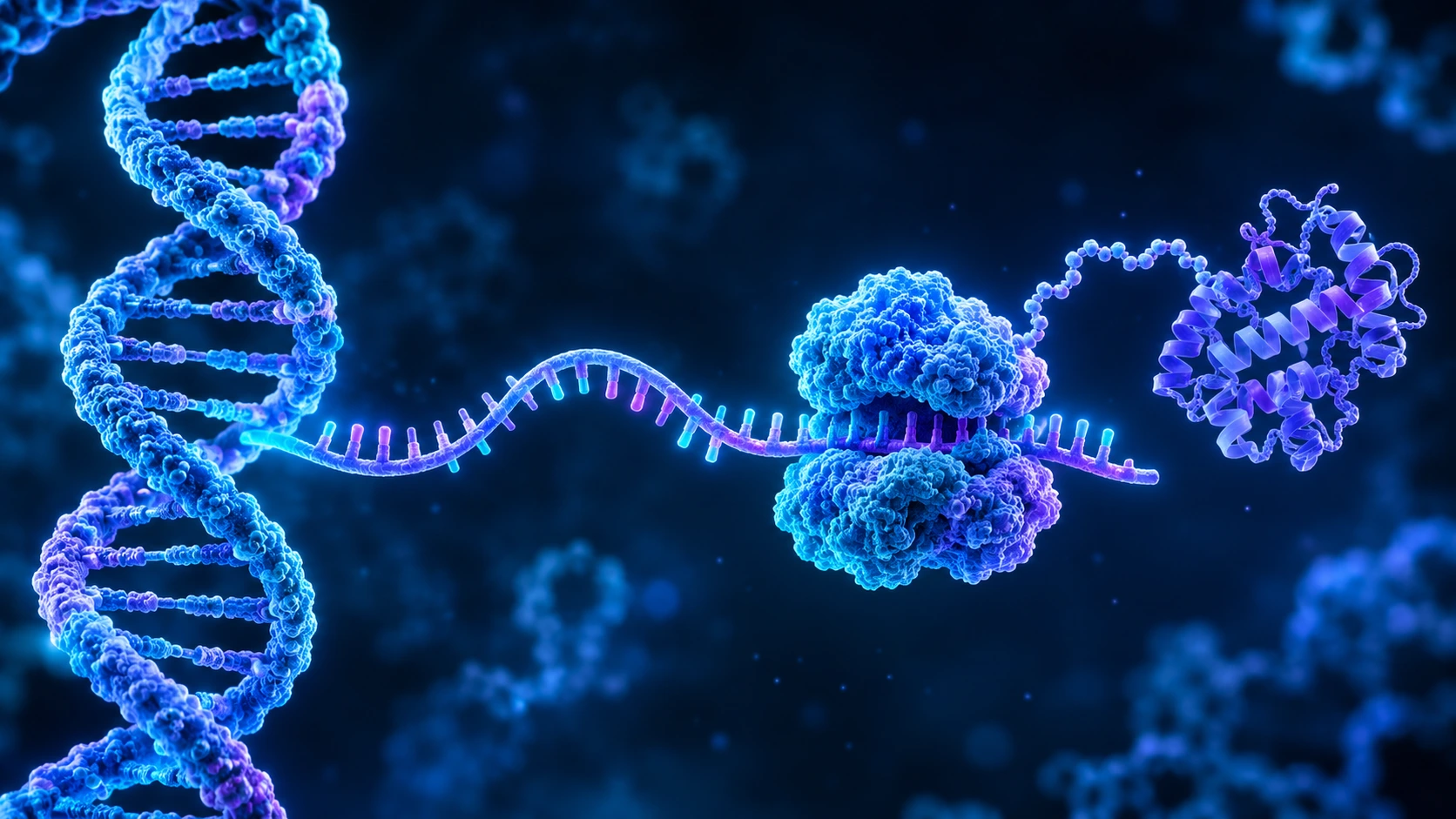
To understand mRNA technology, we first need to understand how cells naturally produce proteins.
DNA stores genetic information. In most human cells, it is located inside the nucleus and contains
instructions for producing the proteins required by the organism.
However, ribosomes — the cellular structures responsible for protein synthesis — are located in the
cytoplasm.
This creates a need for a molecular messenger.
During a process called transcription, a selected region of DNA is used as a template to produce an RNA
molecule. In protein-coding genes, this message is processed into messenger RNA.
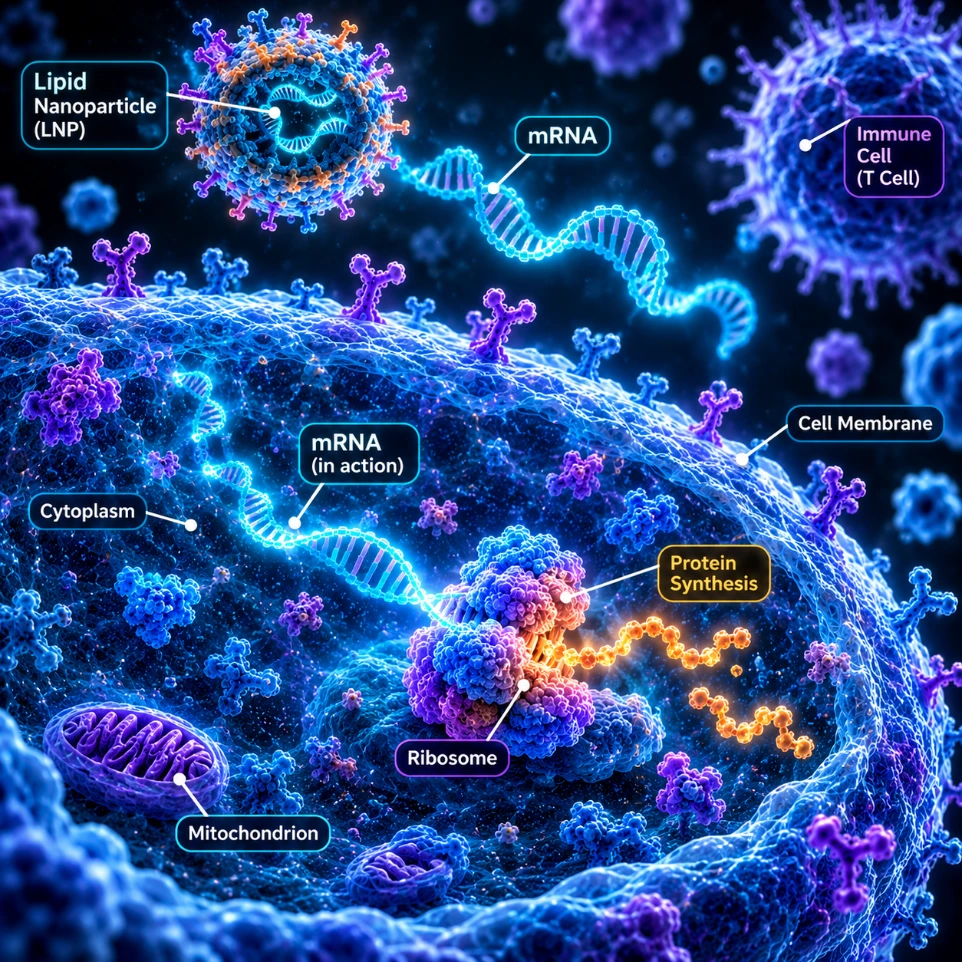
The mRNA then moves into the cytoplasm, where ribosomes read its nucleotide sequence.
During translation, the ribosome interprets the message in groups of three nucleotides, called codons.
These codons specify amino acids, which are joined together to form a protein.
The relationship can be summarised as:
- DNA: Stores genetic information.
- mRNA: Carries a temporary copy of selected instructions.
- Ribosome: Reads the mRNA sequence.
- Protein: The product formed through translation.
This process is part of normal cellular biology. mRNA technology makes use of this existing system by
introducing a laboratory-designed mRNA molecule containing instructions for a selected protein.
In other words, scientists are not creating an entirely new protein-production system. They are learning
how to use one that cells already possess.
How Does mRNA Technology Work?
The central principle of mRNA technology is to deliver a carefully designed RNA message into cells so that
their ribosomes can produce a particular protein.
Consider an mRNA vaccine as an example.
The process involves several biological stages.
Stage 1 — Designing the genetic message
Researchers identify a protein or a part of a protein that could be useful for generating an immune
response.
They then design an mRNA sequence that contains the information required to produce that selected
protein.
The sequence and structure of the mRNA are important because they influence how efficiently it is
translated and how the immune system responds to it.
Stage 2 — Protecting and delivering the mRNA
mRNA is naturally unstable and can be broken down by enzymes called RNases.
It also cannot efficiently cross cell membranes on its own.
For this reason, many mRNA medicines use specialised delivery systems, particularly lipid nanoparticles, to
protect the RNA and help it enter cells.
Stage 3 — Protein production
Once the mRNA becomes available in the cytoplasm, ribosomes translate its nucleotide sequence into a
protein.
This protein is not produced by changing the cell's DNA. Instead, the cell temporarily uses the delivered
message as a template for protein synthesis.
Stage 4 — Immune recognition
In a vaccine, the produced antigen can be processed and presented to immune cells.
This helps activate immune responses involving specialised cells, including T lymphocytes and B
lymphocytes. Depending on the vaccine and antigen, the response can also include the production of
antibodies.
The objective is to establish immune recognition so that the body can respond more effectively if it
encounters the pathogen later
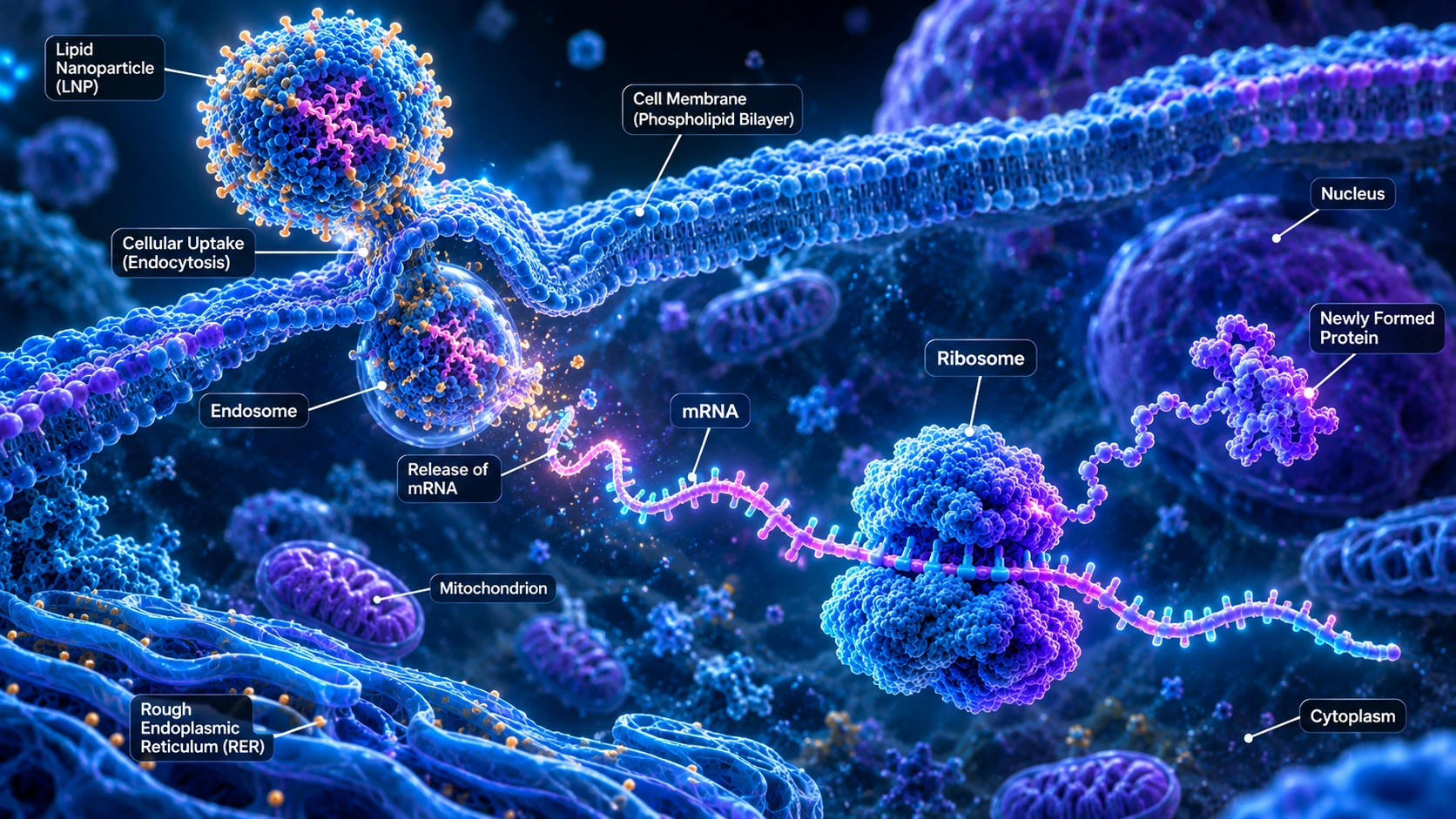
One important distinction is that the mRNA itself is not the vaccine's final target. It is the temporary
instruction used to produce the antigen that stimulates the immune response.
After the message has been used, cellular processes break it down.
For conventional mRNA vaccines, the delivered mRNA does not need to enter the nucleus to perform its
function and does not rewrite the recipient's DNA.
03 — The Delivery Challenge: Why Do We Need Lipid Nanoparticles?
Designing an effective mRNA sequence is only one part of developing an mRNA medicine.
A second, equally important challenge is delivery.
mRNA is a large, negatively charged molecule. It does not easily pass through the lipid-based cell
membrane. In addition, enzymes present in biological environments can degrade it.
Scientists therefore needed a way to protect the molecule and improve its delivery into cells.
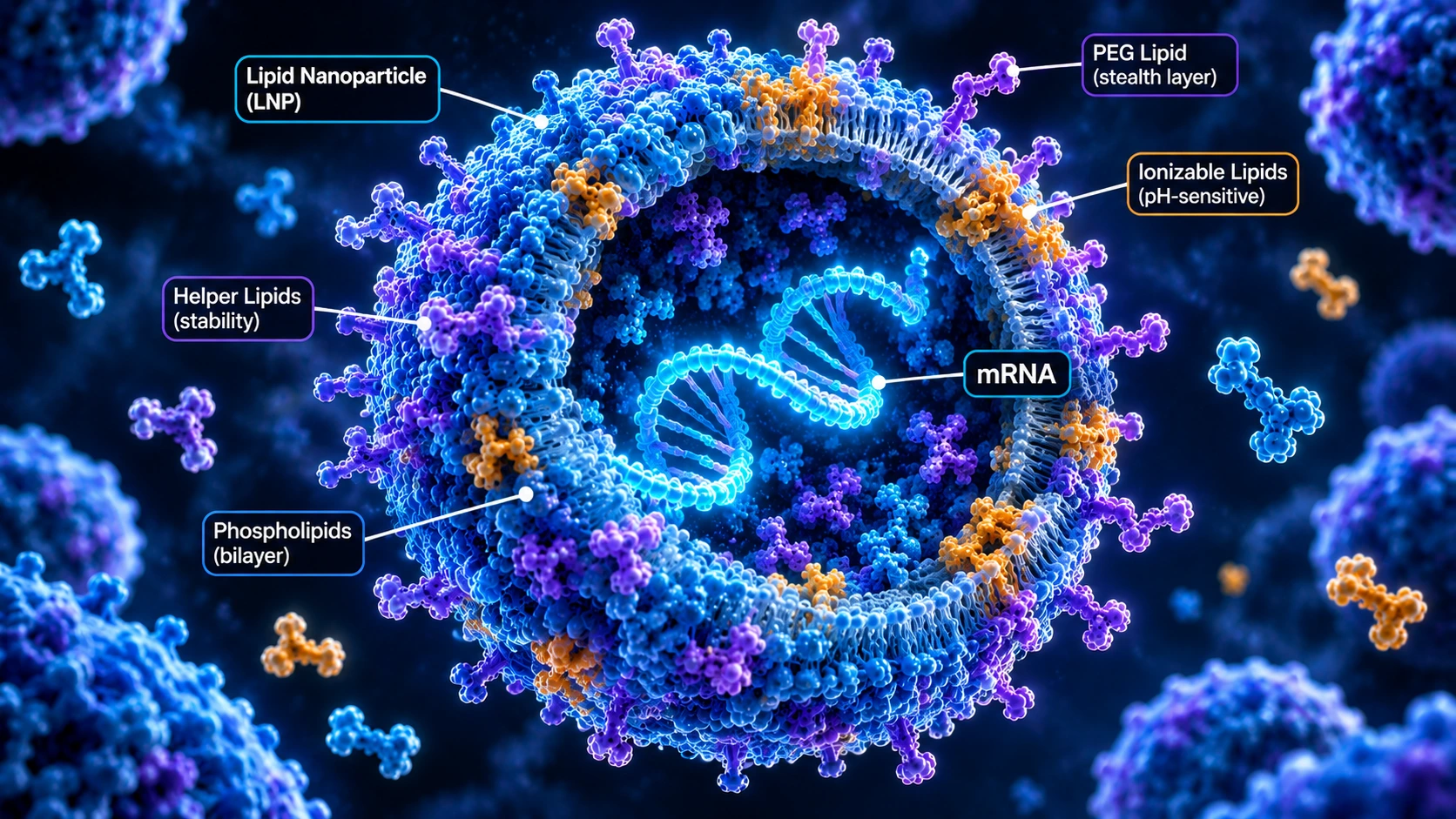
One important development was the use of lipid nanoparticles (LNPs).
LNPs are microscopic particles made from specially designed lipid components. They can encapsulate or
associate with nucleic acids, helping protect them and support their delivery into cells.
A typical ionisable lipid nanoparticle formulation contains several components:
- Ionisable lipids: Important for RNA association and intracellular delivery.
- Phospholipids: Contribute to the particle's structural organisation.
- Cholesterol: Helps regulate particle structure and stability.
- PEG-lipids: Help influence particle size and behaviour in biological environments.
Following cellular uptake, the particle must release its RNA cargo into the cytoplasm. This process is often
described as endosomal escape, and it remains an important area of research.
The development of lipid nanoparticles was not a sudden discovery during the COVID-19 pandemic. It was
built on decades of research into lipid chemistry, nucleic-acid delivery and cell biology.
A 2024 perspective by Cullis and Felgner in Nature Reviews Drug Discovery describes the research history
behind lipid nanoparticles and their role in enabling nucleic-acid medicines.
This is an important lesson in biotechnology: an effective treatment often depends not only on the
biological molecule itself, but also on how that molecule reaches its intended destination.
04 — Beyond COVID-19: What Can mRNA Technology Be Used For?
The success of mRNA vaccines against COVID-19 demonstrated the clinical potential of this platform.
However, the same general principle — delivering temporary instructions for protein production — is being
investigated in several other areas.
A. Infectious disease vaccines
mRNA vaccines can instruct cells to produce selected antigens from a pathogen.
The immune system can then recognise these antigens and develop an immune response.
The COVID-19 vaccines provided a major demonstration of this approach and increased scientific interest
in applying the platform to other infectious diseases.
B. Personalised cancer immunotherapy
Cancer is not a single disease. Different tumours can contain different genetic changes, and even tumours
of the same type may differ between patients.
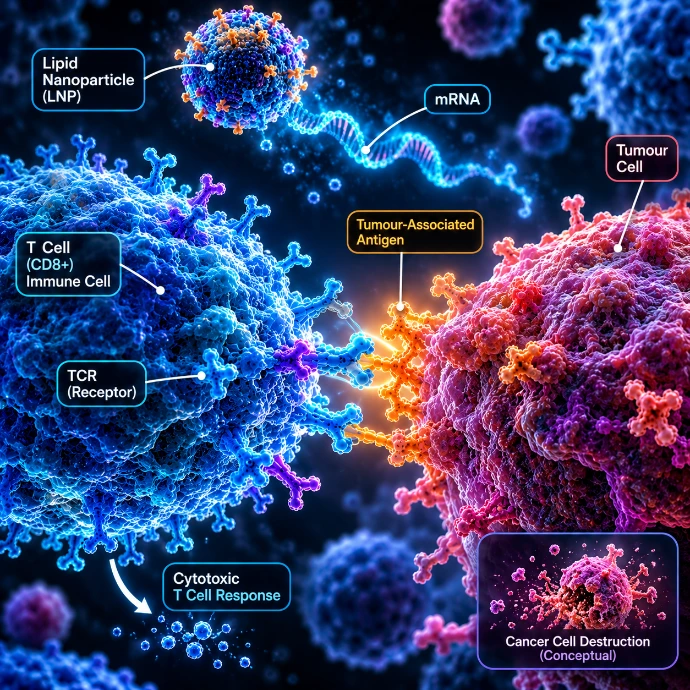
Some of these changes can produce abnormal protein fragments known as neoantigens.
Certain neoantigens may be recognised by the immune system as unusual or foreign.
Researchers are investigating whether personalised mRNA vaccines can encode selected neoantigens
from an individual's tumour. The resulting proteins may help the immune system recognise tumour-
associated targets.
Unlike a conventional preventive vaccine, this approach is being investigated as a treatment strategy for
people who already have cancer.
C. Protein replacement and other therapeutic research
Scientists are also studying mRNA as a way to temporarily produce proteins that may be missing or
insufficient in certain biological conditions.
The broader idea is to use the body's own protein-production machinery as part of a therapeutic strategy.
However, each proposed application faces different challenges.
An mRNA platform that works well for a vaccine does not automatically become an effective treatment
for another disease.
05 — A Closer Look at the Evidence: Can mRNA Be Used in Cancer Treatment?
One of the most interesting developments in mRNA research is the investigation of personalised cancer
vaccines.
A useful example is the KEYNOTE-942 clinical trial, published in The Lancet in 2024.
The study investigated an individualised neoantigen therapy called mRNA-4157, also known as V940, in
combination with pembrolizumab, an existing immunotherapy drug.
What were the researchers investigating?
The study involved patients with high-risk melanoma that had been surgically removed.
Melanoma is a type of skin cancer that develops from pigment-producing cells called melanocytes.
The researchers wanted to investigate whether adding a personalised mRNA-based treatment to
pembrolizumab could improve outcomes compared with pembrolizumab alone.
How was the approach personalised?
Researchers analysed tumour-related information to identify selected neoantigens.
An individualised mRNA treatment was then designed to encode multiple selected neoantigens associated
with the patient's tumour.
The intention was to help the immune system recognise these tumour-associated targets.
What did the study find?
A total of 157 participants were assigned to two groups:
- 107 received mRNA-4157 together with pembrolizumab.
- 50 received pembrolizumab alone.
At 18 months, the estimated recurrence-free survival was:
- 79% in the combination group.
- 62% in the pembrolizumab-only group.
Recurrence-free survival refers to the period during which patients remain free from cancer recurrence or
death, according to the study's defined outcome.
These results provided encouraging evidence that personalised mRNA-based immunotherapy might have a
role in treating certain patients with melanoma.
Text
What should we conclude?
Scientific interpretation requires caution.
This was a Phase 2b trial with a relatively small participant group. Although the results showed a difference
between the groups, the reported hazard ratio confidence interval included 1 and the reported p-value was
0.053.
Therefore, the findings are promising but should not be treated as definitive proof of benefit.
The study does not demonstrate that mRNA vaccines cure cancer. Instead, it provides evidence supporting
further investigation of personalised mRNA-based treatments.
It is that researchers have demonstrated a way to design an individualised RNA-based treatment around
selected tumour antigens and test it alongside existing immunotherapy.
06 — What Are the Major Scientific Challenges?
Despite the progress made in mRNA research, several challenges remain.
Understanding these limitations is just as important as understanding the technology's potential.
1. mRNA stability
RNA molecules are vulnerable to degradation. Maintaining their quality during production, storage and
delivery is an important requirement.
2. Efficient delivery
Getting the mRNA into the correct cells and releasing it into the cytoplasm remains a major challenge.
Delivery systems need to be optimised for different tissues and therapeutic purposes.
3. Immune responses
The immune system can recognise RNA molecules and components of their delivery systems. Some
immune activation may be useful in vaccination, but excessive or unintended responses can affect safety
and effectiveness.
4. Manufacturing and quality control
Producing RNA medicines consistently requires careful control of purity, composition, particle characteristics and biological activity.
5. Individual differences
A treatment designed around one person's tumour may
not produce the same response in another person. Tumour
biology and immune responses vary between individuals.
These challenges explain why mRNA research involves more
than simply designing a genetic sequence. It requires a
combination of molecular biology, immunology, chemistry, materials science and clinical research.
A 2024 review by Estapé Senti and colleagues discusses the delivery systems being investigated for
mRNA-based cancer immunotherapy, including lipid nanoparticles and alternative platforms.
07 — What Could the Future of mRNA Medicine Look Like?
The future of mRNA technology will depend on how successfully researchers address its biological and
technical limitations.
One promising direction is personalised medicine, where treatments are designed around the molecular
characteristics of an individual's disease.
In cancer research, this could involve selecting tumour-specific targets and developing treatments that
help the immune system recognise them.
In infectious disease research, mRNA platforms may support the development of vaccines against a wider
range of pathogens.
Another important direction is improving delivery systems. Better targeting, stability and intracellular
delivery could expand the range of tissues and diseases that RNA medicines can address.
However, scientific progress should not be confused with clinical availability.
A promising result in a laboratory or early clinical trial does not automatically become an approved
treatment. Each application requires evidence from carefully designed clinical studies.
Perhaps the most important contribution of mRNA technology is the new flexibility it offers researchers.
Instead of developing every treatment around a completely different biological approach, scientists can
investigate how temporary genetic instructions might be adapted to produce different proteins for
different medical purposes.
The platform is not a universal solution. But it has expanded the possibilities available to modern
biomedical research.
08 — The Bigger Picture:
A New Way to Think About Medicine
mRNA technology is a powerful example of how understanding fundamental biology can lead to new
medical possibilities.
The discovery of how genetic information is transcribed and translated was not originally made with
mRNA vaccines in mind. Yet decades of research into RNA biology, immunology, lipid chemistry and
molecular delivery helped turn that basic knowledge into a clinical technology.
It also highlights an important principle of modern science: major breakthroughs rarely come from one
discovery alone.
They often emerge when different scientific disciplines contribute pieces of the same problem.
For mRNA medicine, the next stage will depend on better delivery systems, improved molecular design
and strong clinical evidence.
We are not programming cells permanently. We are learning how to communicate with their existing
biological machinery using temporary molecular instructions.
And that distinction is what makes mRNA technology scientifically fascinating.
09 — References & Further Reading
Explore the original research and scientific sources behind this article.
1. Understanding mRNA vaccines
National Human Genome Research Institute. Understanding COVID-19 mRNA Vaccines.
Read the scientific explainer
2. Lipid nanoparticle development
Cullis, P. R., & Felgner, P. L. (2024). The 60-year evolution of lipid nanoparticles for nucleic acid delivery.
Nature Reviews Drug Discovery, 23, 709–722.
DOI: 10.1038/s41573-024-00977-6
3. mRNA delivery systems for cancer immunotherapy
Estapé Senti, M., García Del Valle, L., & Schiffelers, R. M. (2024). mRNA delivery systems for cancer
immunotherapy: Lipid nanoparticles and beyond. Advanced Drug Delivery Reviews, 206, 115190.
DOI: 10.1016/j.addr.2024.115190
4. Personalised mRNA cancer vaccine clinical trial
Weber, J. S., et al. (2024). Individualised neoantigen therapy mRNA-4157 (V940) plus pembrolizumab
versus pembrolizumab monotherapy in resected melanoma (KEYNOTE-942): A randomised, phase 2b
study. The Lancet, 403(10427), 632–644.
DOI: 10.1016/S0140-6736(23)02268-7
10 — Join the Discussion
The science is advancing. What do you think comes next?
mRNA technology has already demonstrated its value in vaccine development. Its possible applications
in personalised medicine are now being investigated.
Let's discuss:
- Could personalised mRNA vaccines become an important part of cancer treatment?
- What is the biggest challenge researchers must solve before RNA medicines can be used more
- widely?
- Which biological process would you like to see scientists use to develop future treatments?
DISCUSS. QUESTION. EXPLORE.
STROMA
SCIENCE • EDUCATION • IMPACT
NOTE: This article is intended for science education. It does not provide medical advice or recommend
any treatment. Experimental approaches discussed here are not necessarily approved or available for
patient care.